

Why Your Game’s Success Starts Long Before Launch
In the high-stakes world of game development, there is a recurring nightmare: after three years of coding, polishing, and crunching, the game finally hits Steam or the App Store, only to be met with a “Mixed” rating. Players complain that the tutorial is confusing, the difficulty spikes are unfair, and the core mechanic—the one you loved—is actually “tedious.”
At this point, fixing the core experience is no longer an optimization task; it is an expensive, soul-crushing surgical operation on a live product.
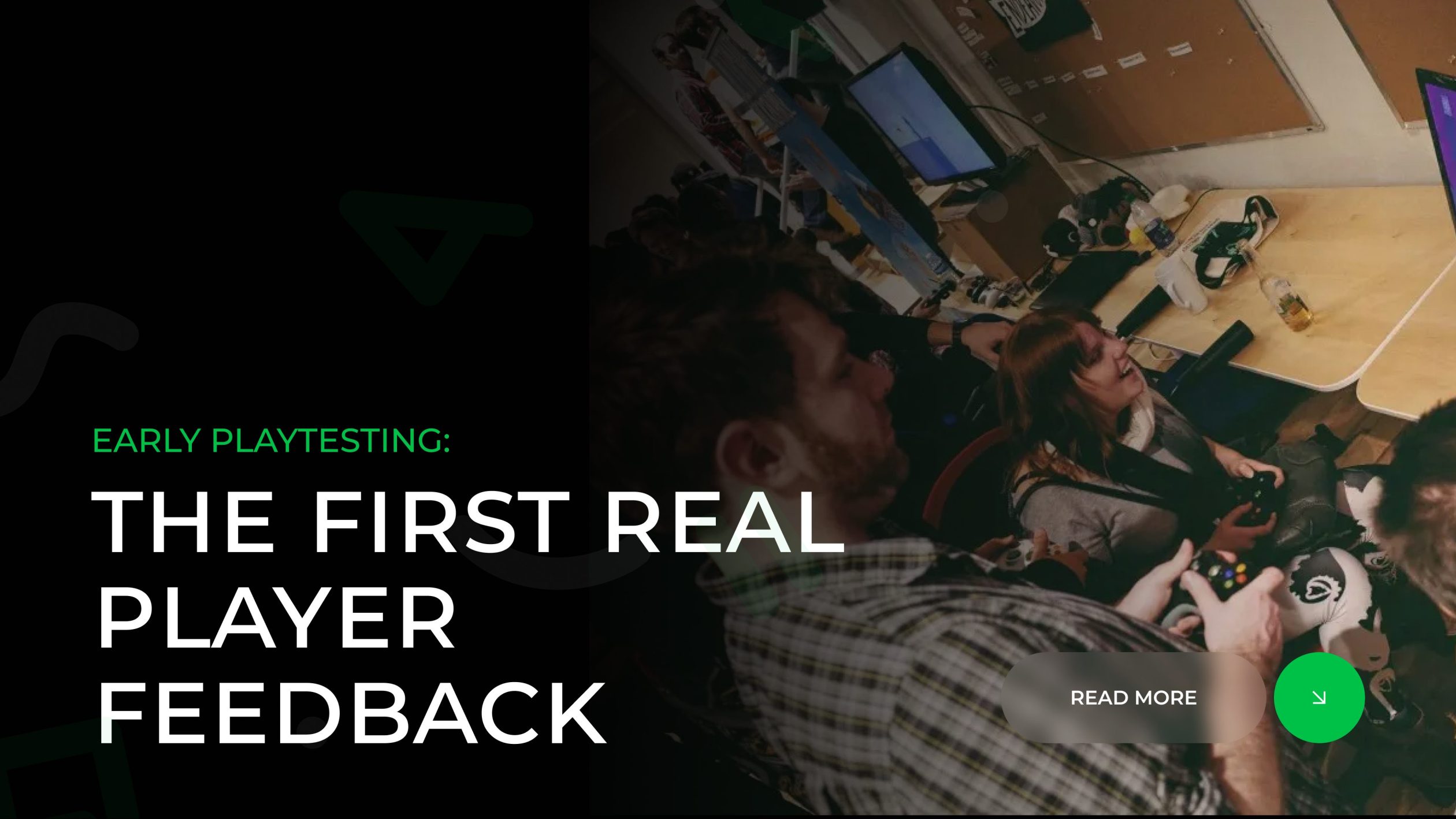
This is why Early Playtesting is not just a “nice-to-have” phase—it is the most critical insurance policy your studio can buy. Moving from an internal “bubble” to real player feedback is the moment of truth. Here is why early playtesting is the foundation of every hit title and how to master it.
Shattering the “Developer Bubble”
When you spend 10 hours a day inside a game engine, you develop “developer eyes.” You know exactly where to go, which buttons to press, and how to circumvent every awkward UI choice because you built them.
Real players don’t have your mental map.
Early playtesting provides the first unfiltered look at your game through “fresh eyes.” It reveals the cognitive load—the mental effort required for a player to understand your world. If a player spends their first 20 minutes struggling with the inventory system rather than enjoying the combat, you’ve already lost them. Early feedback identifies these friction points while the code is still flexible enough to be changed.
Validation of the “Core Loop”
Every successful game is built on a “core loop”—the repetitive cycle of actions that keeps a player engaged. In an RPG, it’s Explore > Fight > Loot > Level Up. In a puzzle game, it’s Observe > Experiment > Solve.
If the core loop isn’t fun in gray-box environments with placeholder assets, adding high-fidelity 4K textures won’t save it.
Early Playtesting allows you to:
- Test the “Hook”: Does the game feel rewarding in the first 10 minutes?
- Verify Pacing: Is there too much downtime? Or is the intensity so high that the player burns out?
- Confirm Motivation: Do players actually care about the rewards you are giving them?
By testing these loops early, you can pivot the design without wasting thousands of hours on art and animation for a mechanic that doesn’t resonate.
The Power of Qualitative vs. Quantitative Data
Many studios rely heavily on telemetry (automated data). They see that 40% of players quit at Level 3. That is Quantitative Data—it tells you what happened.
Playtesting provides the Qualitative Data—it tells you why it happened.
Quantitative: “Players are dying at the first boss.”
Qualitative (Playtesting): “Players don’t realize the boss has a shield that can only be broken by the heavy attack they haven’t learned yet.”
Without the “why,” you are guessing. With playtesting, you have a roadmap for the fix.
Do you want to avoid low player retention?
Get the team that will examine the game’s plot, difficulty modes, immersion, level tuning, and balance to find its weak spots
Emotional Mapping and Player Sentiment
Games are an emotional medium. Whether you want your player to feel powerful, terrified, or curious, you need to know if those emotions are actually landing.
During early playtesting, professional QA partners like SnoopGame use “Think Aloud” protocols and post-session interviews to map the player’s emotional journey. We look for:
- The “Aha!” Moment: The satisfying second when a player masters a mechanic
- The Frustration Peak: Where a player stops being challenged and starts feeling cheated
- The Boredom Valley: Areas where the player’s engagement drops
Mapping these emotions early allows you to smooth out the valleys and amplify the peaks.
Accessibility and UI/UX Clarity
In 2026, accessibility is a standard, not a feature. Early playtesting is the only way to ensure your game is playable by a diverse audience.
- Color Blindness: Are your “Enemy” vs. “Ally” indicators distinguishable?
- Font Legibility: Can players read the quest text on a small handheld screen like the Steam Deck or Switch 2?
- Controller Mapping: Does the layout feel intuitive to someone who hasn’t seen your internal design docs?
Detecting UI/UX flaws early prevents a “Review Bomb” regarding poor accessibility at launch.
Balancing the Difficulty Curve
Developers are naturally “Pro” players of their own games. This often leads to games that are too difficult for the average consumer.
Early playtesting with different player archetypes—from “Casual” to “Hardcore”—helps you build a difficulty curve that is a “sliding scale.” It ensures that your game is “easy to learn, but difficult to master,” rather than “impossible to start.”
How to Conduct Effective Early Playtesting
To get the most out of your first real player feedback, you need a structured approach. Simply “letting people play” isn’t enough.
A. Define Your Objectives
What are you testing? Is it the combat balance? The tutorial clarity? The narrative engagement? Pick one or two focuses per session.
B. Recruit the Right “Personas”
If you are building a Soulslike, don’t test it exclusively with Match-3 players. You need people who understand the genre’s language but haven’t seen your specific project.
C. Observe, Don’t Guide
The biggest mistake developers make is hovering over a player and saying, “Oh, just click that button there.” In the real world, you won’t be in the player’s living room. Let them fail. Their failure is your most valuable data point.
The ROI of Early Playtesting
From a business perspective, playtesting is the ultimate cost-saving measure.
- Reduced Post-Launch Support: Fewer “broken” mechanics mean fewer emergency patches
- Higher Retention Rates: Players who enjoy the first hour are 60% more likely to finish the game and buy DLC
- Better Marketing: When you know exactly what players love, you know exactly what to put in your trailer
Transitioning from Playtesting to Professional QA
While early playtesting with “friends and fans” is a great start, it often lacks the technical rigor needed for a global launch. Fans might be “too nice” or miss deep-seated technical bugs.
Professional QA teams, such as SnoopGame, bridge the gap between “Player Feedback” and “Technical Stability.” We take those qualitative player insights and turn them into actionable technical tickets for your dev team.
Conclusion: Don’t Launch in the Dark
The first time a stranger plays your game is a terrifying moment. But it is also the moment your game truly begins to live.
Early playtesting isn’t about finding out if your game is “good” or “bad”—it’s about discovering how to make it the best version of itself. By embracing feedback when the project is still malleable, you transform “the first real player feedback” from a source of anxiety into your most powerful competitive advantage.
Your players are talking. Are you listening?